

When a parent, grandparent, or another family member begins needing extra help at home, one of the first questions families face is:
Do we need a caregiver or a nurse?
Both can play important roles in home care, but their responsibilities are different. A caregiver generally supports a person’s everyday activities, while a registered nurse is a licensed healthcare professional who can provide nursing assessment and clinical care within their professional scope.
Understanding the difference can help families choose the right kind of support—and avoid paying for a level of care that may not be necessary or, more importantly, relying on someone who is not qualified to provide the care required.
The Philippines Is Getting Older
This question is becoming increasingly relevant for Filipino families.
According to the Philippine Statistics Authority’s 2024 Census of Population, the Philippines had 11.42 million people aged 60 and above in 2024, representing 10.2% of the household population. In 2020, there were 9.22 million senior citizens, representing 8.5%.
In other words, approximately one in every ten Filipinos is now a senior citizen.
As the country’s older population grows, more families will need to think about how parents and grandparents can continue living safely and comfortably—particularly when their adult children work full-time, live in another city, or are overseas.
What Does a Caregiver Do?
This question is becoming increasingly relevant for Filipino families.
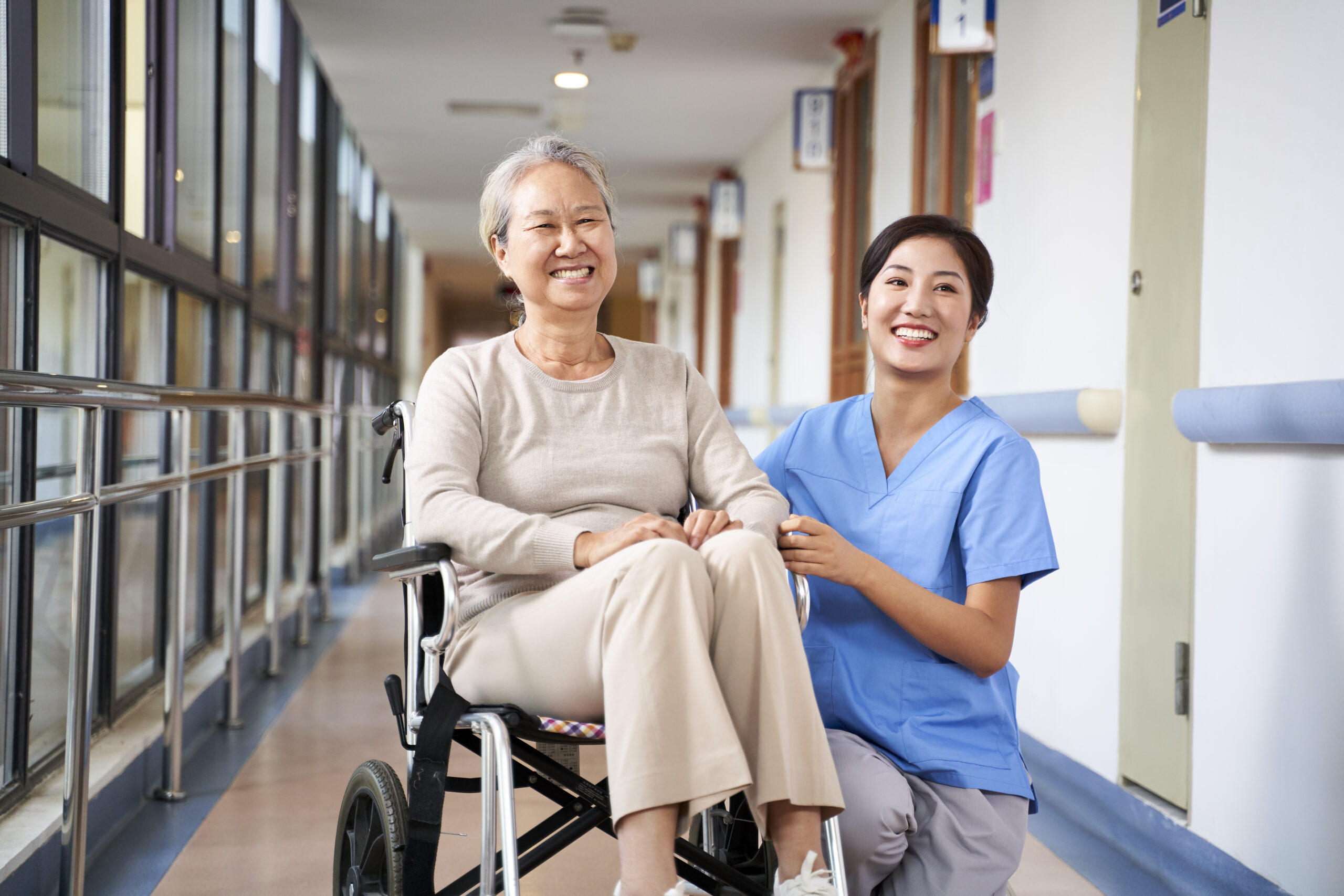
A caregiver primarily provides assistance with everyday living and personal care. Depending on the person’s needs, this may include:
Imagine that your 75-year-old mother is medically stable and generally independent. However, arthritis is making it increasingly difficult for her to bathe, prepare meals, and move around the house safely.
She may not need continuous nursing care. What she may need is assistance with everyday activities.
This type of support is particularly important in the Philippine context because much of elder care has traditionally been provided by family members.
A study published in the Journal of Aging and Health examined older Filipinos who had difficulty with activities of daily living (ADLs) or instrumental activities of daily living (IADLs). Using data from the Philippine Study on Aging, researchers found that family members—particularly spouses and daughters—played an important role in providing assistance to older people.
The researchers also noted that patterns of family caregiving may change as the country’s demographics and social values change.
What Does a Home Care Nurse Do?
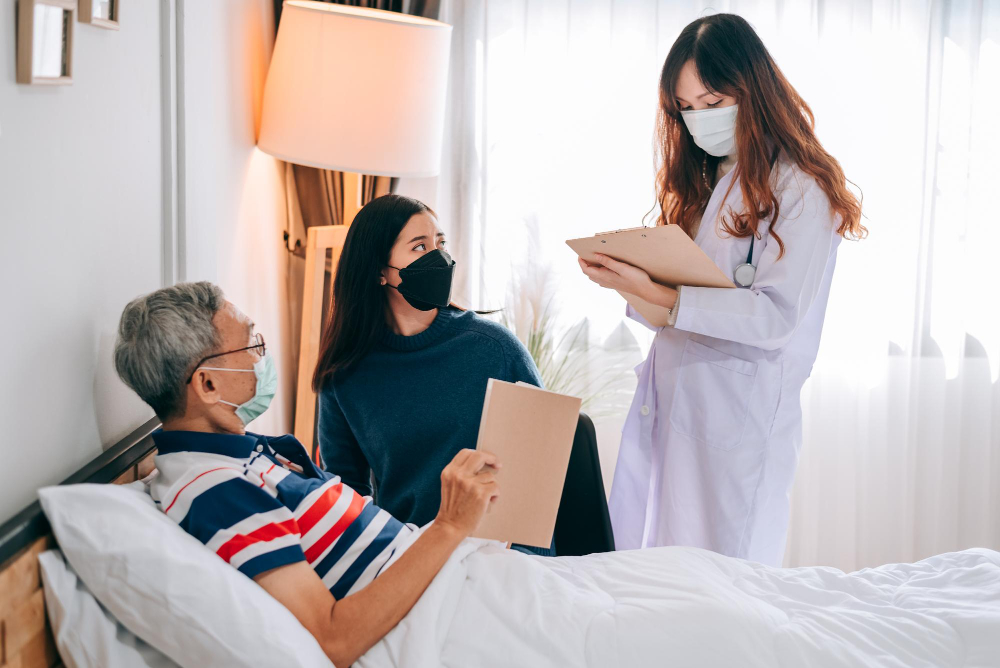
A nurse may be necessary when a person’s needs involve professional nursing assessment, monitoring, or clinical procedures, rather than primarily assistance with daily activities.
Depending on the patient’s condition, physician’s instructions, and the nurse’s professional scope, home nursing may include services such as:
Consider a different example.
Your father has just returned home following surgery. His wound requires professional care and his doctor has provided instructions for continued monitoring at home.
This is different from needing help bathing or preparing meals. His needs may require the skills of a licensed nurse.
What If Someone Is Coming Home From the Hospital?
The transition from hospital to home can be an especially important period for older adults.
This is sometimes referred to as transitional care—coordinated care intended to help maintain continuity as a patient moves between healthcare settings, such as from a hospital back to their home.
A 2025 systematic review published in the European Journal of Ageing examined 25 randomized controlled trials involving 17,542 adults aged 65 and older. The researchers found that hospital-to-home transitional-care interventions varied considerably in their design and outcomes, but many involved combinations of discharge planning, follow-up, patient or caregiver involvement, and home-based support.
Another systematic review and meta-analysis, published in Geriatric Nursing in 2022, examined transitional care specifically for frail older adults. It found that transitional care reduced hospital readmissions at the six-month point, although this effect was not consistently found at other time points. The authors therefore concluded that the overall effectiveness of the different interventions remained inconclusive.
The important takeaway for families is not that everyone leaving a hospital automatically needs a private nurse.
Instead, the care required after discharge should depend on the person’s individual medical and everyday needs and the discharge plan provided by their healthcare team.
Can Someone Need Both a Nurse and a Caregiver?
Yes.
In fact, separating medical needs from daily-living needs can make the decision much easier.
Imagine an elderly parent recovering from surgery.
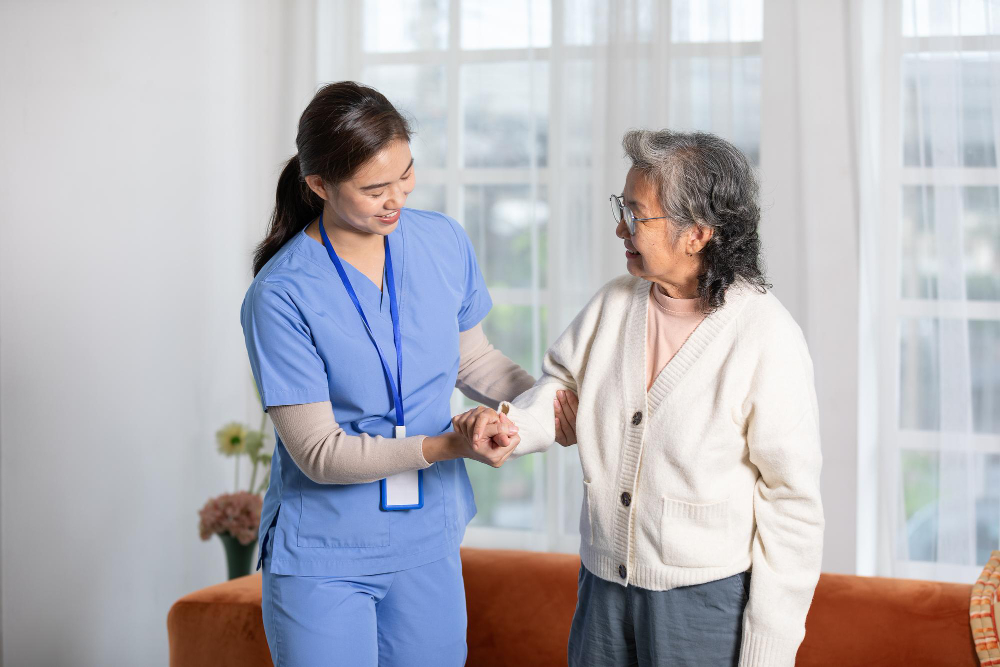
A nurse may visit to assess the patient and provide prescribed wound care. But the same person may also need help bathing, getting dressed, preparing meals, going to the bathroom, or moving safely around the home.
Those needs don’t necessarily require the same professional.
A family may therefore use nursing care for clinical needs and caregiving support for everyday assistance.
How Do You Know Which One You Need?
Start by listing what your loved one actually needs help with.
1 A caregiver may be appropriate when the main needs involve:
2 A nurse may be appropriate when the person requires:
3 Your loved one may need both when:
They have clinical needs and require significant assistance with everyday activities.
When you’re unsure whether a particular task requires a nurse, consult your loved one’s doctor or another qualified healthcare professional rather than making the decision based solely on convenience or cost.
Don’t Forget the Person Receiving the Care

Qualifications are important, but so are dignity, independence, and personal preference.
An older adult who needs some assistance does not necessarily need someone to take over everything.
Where possible, involve your loved one in decisions such as:
The objective of home care should not simply be to do things for someone. It should help the person remain as safe, comfortable, and independent as reasonably possible.
Finding the Right Level of Care
Every family’s situation is different.
A healthy 70-year-old who needs companionship a few times a week has very different needs from an 85-year-old recovering from a stroke.
Similarly, someone who requires professional wound care has different needs from someone who mainly needs assistance preparing meals and moving around the house.
Before looking for a care provider, ask three questions:
Answering these questions can make it much easier to determine whether your family needs a caregiver, a nurse, or a combination of both.
Care Panda helps families connect with nurses and caregivers for home-based care based on their individual care needs.
References & Further Reading
Philippine Statistics Authority. (2026). Age and Sex Distribution in the Philippine Population (2024 Census of Population). The PSA reported 11.42 million Filipinos aged 60 and above in 2024, representing 10.2% of the household population.
Abalos, J. B., Saito, Y., Cruz, G. T., & Booth, H. (2018). Who cares? Provision of care and assistance among older persons in the Philippines. Journal of Aging and Health, 30(10), 1536–1555. https://doi.org/10.1177/0898264318799219
Lee, J. Y., Yang, Y. S., & Cho, E. (2022). Transitional care from hospital to home for frail older adults: A systematic review and meta-analysis. Geriatric Nursing, 43, 64–76. https://doi.org/10.1016/j.gerinurse.2021.11.003
Steiner, L. M., Osmancevic, S., Hahn, S., Bonetti, L., & Zwakhalen, S. (2025). The effectiveness of interventions on clinical and patient-reported outcomes in hospital-to-home transitions of older adults: A systematic review. European Journal of Ageing, 22, Article 58. https://doi.org/10.1007/s10433-025-00890-w
This article is for general informational purposes and is not a substitute for professional medical advice, diagnosis, or treatment.