

When someone you love becomes ill, has surgery, or begins needing more support, families may face a difficult question:
Hospitals are essential when a person requires acute medical treatment, continuous clinical monitoring, emergency intervention, or services that cannot safely be provided elsewhere.
But once a patient is medically stable and their healthcare team determines that hospital-level care is no longer necessary, recovery and continuing care may sometimes take place at home.
The important question isn’t simply “hospital or home?”
It is:
What Is Hospital Care For?
Hospitals are designed primarily to diagnose and treat people who require medical care that cannot appropriately be provided at home.
If someone’s condition is unstable or potentially life-threatening, home care is not a substitute for hospital treatment.
Home care becomes relevant when the person’s medical team considers them sufficiently stable to leave the hospital or when their ongoing needs do not require hospitalization.
Why Don’t Patients Simply Stay in the Hospital Until They’re Completely Recovered?
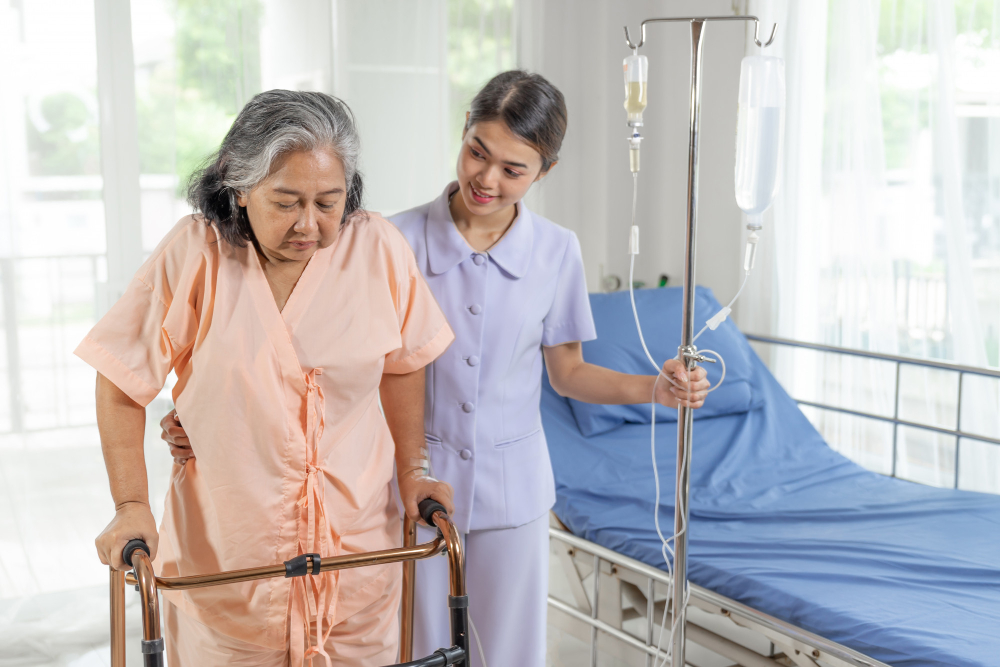
It generally means that the healthcare team has determined that the patient no longer requires that particular level of hospital care and can continue the next stage of recovery elsewhere, subject to an appropriate discharge plan.
This transition is important enough that healthcare researchers study it as hospital-to-home transitional care.
A 2025 systematic review published in the European Journal of Ageing examined 25 randomized controlled trials involving more than 17,000 adults aged 65 and older.
Transitional-care programs varied considerably, but commonly included combinations of discharge planning, patient and caregiver education, follow-up, coordination, and home-based support.
The research highlights an important point:
What Can Care at Home Look Like?
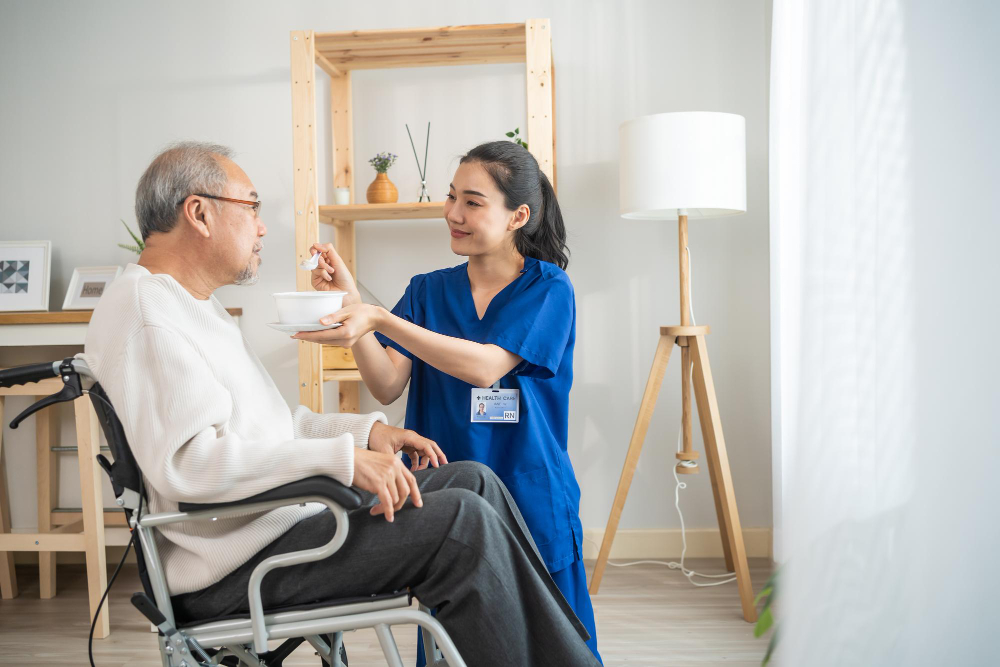
Personal and caregiving support
Someone recovering at home may temporarily need help with:
These needs may be supported by a caregiver.
Nursing care
Other patients may have continuing clinical needs that require a licensed nurse.
Depending on the patient’s condition, physician’s instructions, and the nurse’s professional scope, these may include:
For example, an older person recovering from surgery might require professional wound care from a nurse while also needing a caregiver to assist with bathing, meals, and mobility.
Is Recovering at Home Better?
Not automatically.
However, for appropriately selected patients, receiving care at home can have advantages.
One influential randomized controlled trial published in Annals of Internal Medicine evaluated a “hospital-at-home” model for selected acutely ill adults who would otherwise have received traditional hospital care.
Patients receiving hospital-level care at home had lower healthcare costs, while measures of physical activity and some patient-experience outcomes favored the home group. Importantly, this was a structured clinical program with physician and nursing care—not simply sending sick patients home without medical support.
This distinction matters.
“Hospital at home” and ordinary home caregiving are not the same thing.
Formal hospital-at-home programs provide hospital-level medical services to carefully selected patients in their homes.
A regular caregiver does not replace a hospital.
What About Older Adults?
Home can be particularly meaningful to older adults because it allows them to remain in familiar surroundings and maintain established routines.
But home is only appropriate when the person’s needs can be safely managed there.
The World Health Organization emphasizes person-centred integrated care for older people, including assessment of health and social-care needs and development of individualized care plans.
That means the decision should not simply be based on age.
An independent 80-year-old recovering from a relatively minor procedure may have very different needs from another 80-year-old with several medical conditions, significant mobility limitations, and cognitive impairment.
The Most Important Moment May Be the Transition
One of the most challenging periods can be the first days after leaving the hospital.
Families suddenly become responsible for things that hospital staff previously managed.
There may be:
A systematic review and meta-analysis published in Geriatric Nursing examined transitional care for frail older adults moving from hospital to home. The researchers found a reduction in hospital readmissions at six months, although effects were not consistent across all time points and outcomes.
The evidence does not mean every discharged patient needs professional home care.
It does suggest that planning and continuity during the transition home matter.
Before Leaving the Hospital, Ask These Questions
If your loved one is being discharged, don’t be afraid to ask the healthcare team for clarification.
What can they safely do on their own?
What help will they need?
Ask specifically about personal care, mobility, meals, medications, wound care, and supervision.
Are there nursing procedures that need to continue at home?
If yes, ask who should perform them and how often.
Do not assume that a family member or ordinary caregiver is qualified to perform a nursing procedure.
What medications have changed?
Make sure the family understands the current medication instructions provided by the healthcare team.
What warning signs should we watch for?
Ask:
“What should make us call the doctor, and what should make us go directly to the emergency department?”
Write the instructions down.
When is the next follow-up?
Know the date, location, and purpose of follow-up appointments.
Who should we contact if we have questions?
Families should know whom to call if something is unclear after returning home.
When Is Home Care NOT Enough?
This is one of the most important things for families to understand.
A nurse or caregiver at home should not be used as a substitute for emergency medical treatment.
Seek urgent medical attention when someone develops potentially serious symptoms such as:
When in doubt about a potentially life-threatening situation, seek emergency medical care.
Hospital Care and Home Care Are Not Competitors

It is easy to think of the decision as:
In reality, they often form different parts of the same care journey.
A person might:
The type and intensity of care change as the person’s condition changes.
Preparing Your Home Before Discharge
If you know your loved one will need assistance, try to prepare before they arrive home.
Consider:
Mobility
Can they safely move between the bedroom, bathroom, and living areas?
Bathroom safety
Will they need assistance bathing or using the toilet?
Sleeping arrangements
Is their bed accessible and appropriate for their current mobility?
Meals
Who will prepare food?
Medications
Who will help organize the routine according to the healthcare team’s instructions?
Care schedule
Who will be with the person during the first few days?
Professional support
Will a nurse or caregiver be needed?
Planning these details before discharge can make the transition less stressful for both the patient and the family.
What If You Live Far Away?
Hospital discharge can be particularly stressful when the person responsible for coordinating care lives in another city—or another country.
This is a familiar situation for many Filipino families.
You may be able to speak with your parent’s doctor, pay bills, order groceries, and call several times a day.
But you cannot physically help your parent get out of bed or check how they’re doing at 2:00 in the morning when you’re thousands of kilometers away.
In these situations, families may need to build a local care network involving relatives, healthcare professionals, caregivers, or nurses depending on the person’s needs.
So, Hospital or Home?
Think about it this way:
Hospital care is appropriate when someone requires hospital-level medical treatment and monitoring.
Home care may be appropriate when the person is medically stable enough to be at home but still requires assistance with recovery, nursing needs, or everyday activities.
The decision to discharge someone from hospital should come from the patient’s healthcare team—not from a home-care provider or simply because the family would prefer care at home.
Once home care is appropriate, the next question becomes:
What support will make the transition home safe and manageable?
Care Panda helps Filipino families connect with nurses and caregivers for home-based support based on their individual care needs.
References & Further Reading
Steiner, L. M., Osmancevic, S., Hahn, S., Bonetti, L., & Zwakhalen, S. (2025). The effectiveness of interventions on clinical and patient-reported outcomes in hospital-to-home transitions of older adults: A systematic review. European Journal of Ageing, 22, Article 58. https://doi.org/10.1007/s10433-025-00890-w
Lee, J. Y., Yang, Y. S., & Cho, E. (2022). Transitional care from hospital to home for frail older adults: A systematic review and meta-analysis. Geriatric Nursing, 43, 64–76. https://doi.org/10.1016/j.gerinurse.2021.11.003
Levine, D. M., Ouchi, K., Blanchfield, B., et al. (2020). Hospital-level care at home for acutely ill adults: A randomized controlled trial. Annals of Internal Medicine, 172(2), 77–85. https://doi.org/10.7326/M19-0600
World Health Organization. Integrated care for older people (ICOPE). WHO guidance on person-centred assessment and integrated health and social care for older people.
This article provides general information and should not be used to determine whether a person should remain in, leave, or return to a hospital. Hospital discharge and medical-care decisions should be made with the patient’s treating healthcare professionals. Seek emergency medical attention for serious or life-threatening symptoms.